
Missing teeth affect more than 36 million American adults, leading to daily struggles with eating, confidence, and social life. For Lynnwood residents seeking a lasting solution, comfort and affordability matter just as much as beautiful results. All-on-4 implants offer a pathway to a stronger smile, with sedation options designed for a stress-free experience. This guide walks you through every important step, from candidacy screening to receiving your final restoration.
Table of Contents
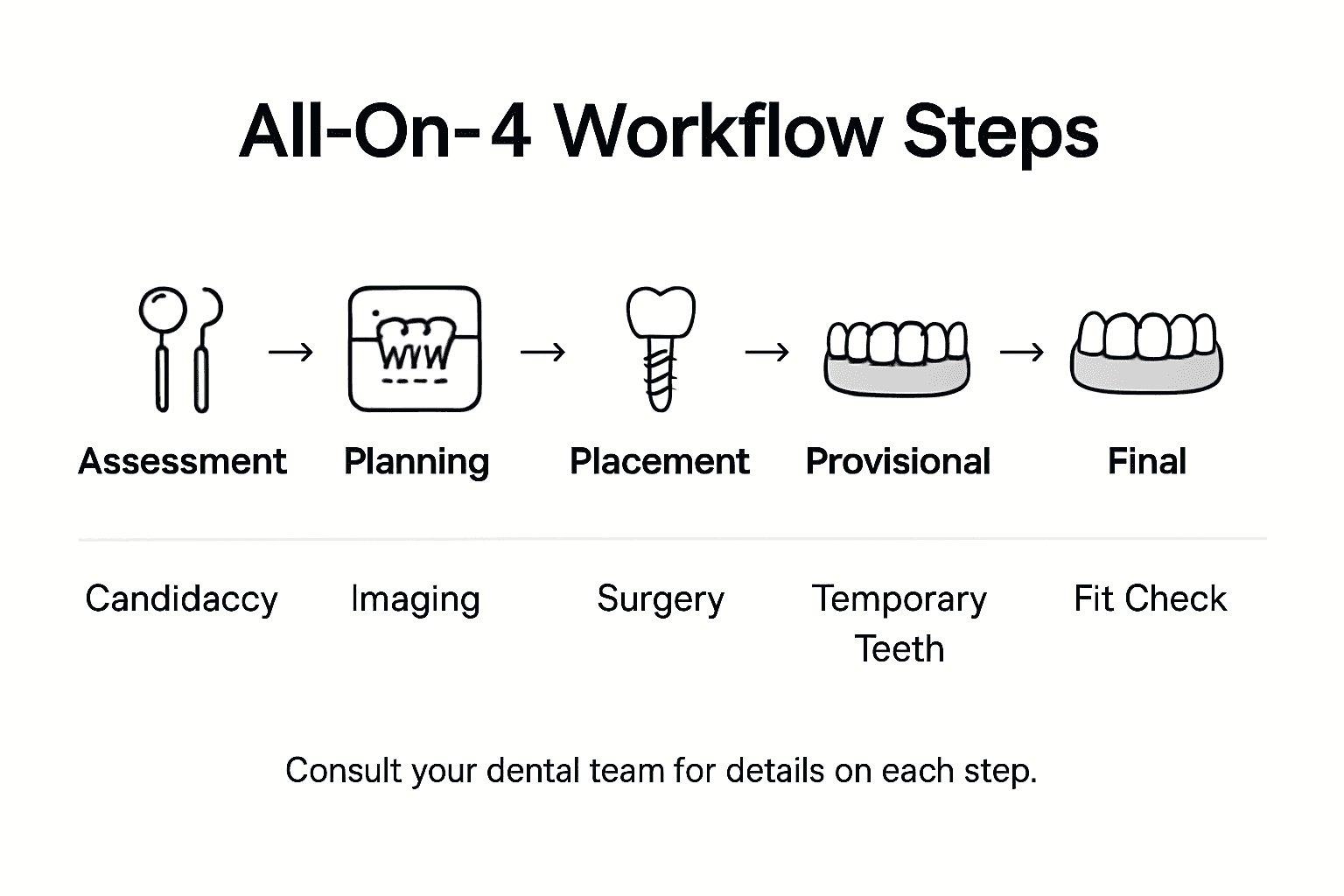
- Step 1: Assess Candidacy For All-On-4 Implants
- Step 2: Plan Custom Treatment With Digital Imaging
- Step 3: Perform Extractions And Implant Placement
- Step 4: Attach Provisional Teeth For Immediate Function
- Step 5: Verify Fit And Place Final Restoration
Quick Summary
| Key Message | Explanation |
|---|---|
| 1. Assess Eligibility Thoroughly | A detailed evaluation of bone density and oral health is essential for determining candidacy for All-on-4 implants. |
| 2. Utilize Advanced Imaging | Digital imaging aids in precise treatment planning, allowing tailored approaches for effective and predictable outcomes. |
| 3. Understand Immediate Options | Provisional teeth can be affixed immediately after implant placement, providing instant functionality and aesthetics. |
| 4. Focus on Final Restoration Fit | The final restoration requires comprehensive verification to ensure optimal fit, function, and aesthetic appeal. |
| 5. Follow Post-Procedure Recommendations | Adhering to dietary and follow-up instructions is crucial for supporting healing and the success of your implants. |
Step 1: Assess candidacy for All-On-4 implants
Assessing your eligibility for All-on-4 dental implants requires a comprehensive evaluation of your oral health and specific anatomical conditions. Understanding the critical factors for successful implant positioning will help determine whether this advanced dental solution matches your unique needs.
During the candidacy assessment, your dentist will carefully examine several key aspects of your oral structure. These include evaluating bone density, jaw anatomy, overall oral health, and functional requirements. Clinical criteria for All-on-4 treatment involve detailed preoperative assessments that help identify patients who will benefit most from this innovative approach. Your dentist will specifically look for patients with terminal or non-restorable teeth, significant bone loss, or those seeking a permanent full-arch restoration solution.
The screening process typically involves advanced imaging techniques like CT scans to map your jawbone precisely and determine optimal implant placement. Your medical history also plays a crucial role, as certain conditions like uncontrolled diabetes or active periodontal disease might impact your candidacy. Patients with adequate bone volume and good overall health are generally considered ideal candidates for this transformative dental procedure.
Here’s a summary of critical factors influencing All-on-4 implant eligibility:
| Factor | Why It Matters | Impact on Treatment |
|---|---|---|
| Bone Density | Supports implant stability | Insufficient bone may require alternatives |
| Jaw Anatomy | Determines implant positioning | Complex anatomy may need customization |
| Oral Health | Ensures healthy healing | Issues can delay or complicate procedure |
| Medical History | Affects implant integration | Chronic diseases may exclude candidacy |
| Functional Needs | Guides restoration design | High bite force influences approach |
Pro tip: Schedule a comprehensive consultation that includes 3D imaging to get the most accurate assessment of your All-on-4 implant potential.
Step 2: Plan custom treatment with digital imaging
Customizing your All-on-4 dental implant treatment begins with an advanced digital imaging process that provides unprecedented precision and personalization. Modern clinical protocols now leverage sophisticated digital scanning techniques to improve implant positioning and treatment accuracy, transforming how dental professionals approach full arch restoration.
The digital treatment planning involves multiple sophisticated steps that create a comprehensive roadmap for your unique dental needs. Your dentist will use intraoral scanning technology to capture detailed 3D images of your jaw structure, allowing for incredibly precise measurements and implant placement strategies. By integrating photogrammetry and 3D printed surgical guides, the digital workflow enables minimally invasive procedures with optimized implant positioning, ensuring both functional and aesthetic outcomes.
This digital planning phase goes beyond simple imaging. It allows your dental team to simulate different implant scenarios, evaluate bone density, assess potential challenges, and design a customized treatment plan that considers your specific anatomical structure. Advanced software enables virtual placement of implants, helping predict potential complications and refine the surgical approach before any physical procedure begins.
Pro tip: Ask your dental professional to walk you through the digital treatment plan visualization to fully understand how each detail of your personalized implant strategy is developed.
Step 3: Perform extractions and implant placement
The extraction and implant placement stage represents a critical transformation in your All-on-4 dental restoration journey. Surgical protocols for this procedure involve a precise sequence of removing remaining teeth and immediately positioning dental implants, allowing for a streamlined approach to full mouth rehabilitation.
Your dental surgeon will carefully remove any remaining teeth and prepare the jawbone for immediate implant placement. The technique strategically positions two axial anterior implants and two angled posterior implants to maximize bone utilization and stability, often eliminating the need for complex bone grafting procedures. This approach enables patients with significant bone loss to receive a comprehensive dental restoration in a single surgical session.
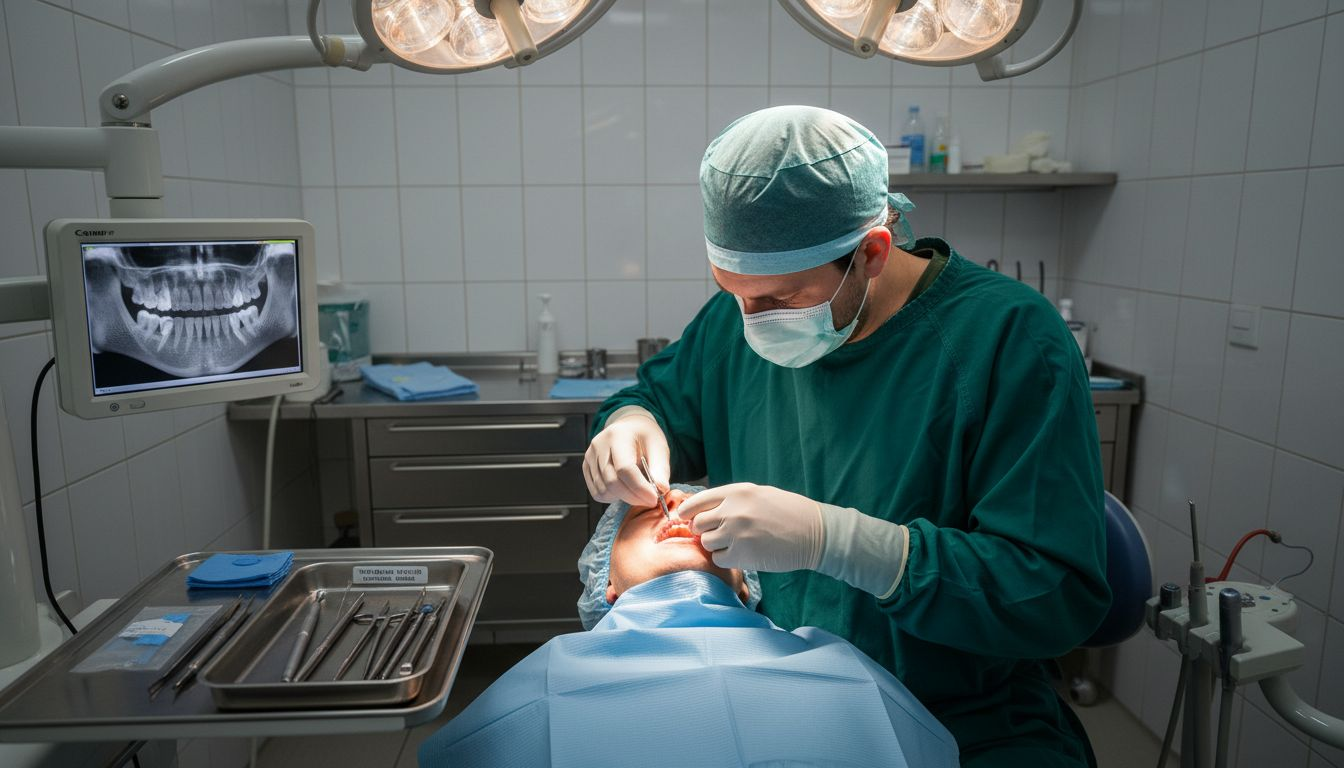
The procedure typically occurs under sedation, with the dental team meticulously executing each step to ensure optimal implant positioning and initial stability. They will use specialized surgical guides developed during the digital planning phase to precisely place implants at calculated angles that provide maximum support for your full arch prosthesis. Immediate loading potential means you could potentially receive temporary teeth on the same day as your surgery, dramatically reducing overall treatment time.
Pro tip: Request detailed images of your implant placement plan to understand exactly how your new dental architecture will be constructed.
Step 4: Attach provisional teeth for immediate function
The attachment of provisional teeth marks an exciting milestone in your All-on-4 implant journey, providing immediate aesthetic and functional restoration. Advanced clinical protocols now enable precise fabrication and placement of temporary prostheses on the same day as implant surgery, transforming your smile and oral functionality in a single appointment.
The immediate loading technique involves carefully crafted provisional prostheses designed to meet both functional and aesthetic demands during the initial healing phase. Your dental team will attach a custom temporary bridge that provides full arch support, allowing you to eat, speak, and smile with confidence while your permanent prosthesis is being meticulously designed. These provisional teeth are engineered to distribute bite forces evenly across your new implants, supporting proper healing and preventing undue stress on the surgical sites.
The process requires precision and expertise from your dental professionals, who will ensure the provisional teeth fit perfectly, align with your natural bite, and provide optimal comfort. Materials are selected for durability and lightweight characteristics, enabling you to experience near normal function immediately after the procedure. Your dentist will make final adjustments to guarantee proper fit, bite alignment, and aesthetic harmony.
Pro tip: Follow all soft diet recommendations during the initial healing period to protect your new provisional teeth and support successful implant integration.
Step 5: Verify fit and place final restoration
The placement of your final All-on-4 restoration represents the culmination of your dental transformation, requiring meticulous precision and expert evaluation. Advanced clinical protocols now utilize sophisticated verification techniques to ensure optimal prosthetic fit and functionality, guaranteeing both aesthetic excellence and long-term durability.
Digital verification methods allow for incredibly precise assessment of the final prosthesis through photogrammetry and advanced imaging technologies, ensuring that every microscopic detail is evaluated before placement. Your dental professional will conduct multiple verification steps including checking bite alignment, evaluating aesthetic harmony, confirming optimal load distribution, and ensuring seamless integration with your existing oral anatomy. This comprehensive approach allows for minute adjustments that transform a good restoration into an exceptional one.
During the placement process, your dentist will carefully seat the final restoration, making incremental adjustments to guarantee perfect fit, comfort, and function. They will assess how the prosthesis interacts with your natural bite, oral muscles, and surrounding tissues. Multiple check points will be used to verify speech clarity, comfort, and aesthetic appearance from multiple angles. The goal is to create a restoration that feels so natural you will forget you ever had missing teeth.
This table compares the provisional teeth and final restoration phases:
| Aspect | Provisional Teeth | Final Restoration |
|---|---|---|
| Main Purpose | Immediate function | Long-term solution |
| Material Used | Lightweight acrylic | Durable ceramic/resin |
| Duration Worn | Several weeks/months | Indefinite, permanent |
| Adjustments Needed | Initial fit, comfort | Precision bite/aesthetic |
| Aesthetic Quality | Good, but temporary | Custom, natural-looking |
Pro tip: Schedule a follow-up appointment within two weeks of final restoration placement to address any minor comfort or fit adjustments.
Transform Your Smile with Expert All-On-4 Implant Care
The journey to a full-arch restoration can be complex and filled with uncertainties about bone density, precise implant placement, and achieving immediate function with provisional teeth. If you are facing the challenges of missing teeth or significant bone loss, understanding the detailed All-On-4 implants workflow is critical to your success. At DentalAteliers, we specialize in guiding patients through each step with personalized evaluations, advanced digital imaging, and skilled surgical implant placement—all focused on delivering long-lasting, natural-looking results.

Discover how our patient-centered approach, led by Dr. Kunal Narang in Lynnwood, WA, addresses your specific dental needs while ensuring comfort and confidence. From your initial candidacy assessment to the final custom restoration, we provide clear communication and expert care. Take the first step towards transforming your smile today by visiting DentalAteliers to schedule your consultation. Learn more about our All-On-4 implants treatment and see why so many patients trust us for comprehensive implant dentistry.
Frequently Asked Questions
What factors determine my candidacy for All-on-4 implants?
Your candidacy for All-on-4 implants depends on factors like bone density, jaw anatomy, oral health, medical history, and functional needs. Schedule a consultation to assess these aspects and understand if this treatment is right for you.
How does the digital imaging process improve All-on-4 implant treatment?
The digital imaging process enhances All-on-4 implant treatment by providing detailed 3D images of your jaw that enable precise measurements and implant placement. Request your dental team to show you a simulation of your treatment plan for better understanding.
What should I expect during the extraction and implant placement stage?
During this stage, your dentist will remove any remaining teeth and position the implants using specialized techniques for maximum stability. Prepare for the procedure by discussing sedation options and ensuring you follow pre-surgery instructions given by your dental professional.
How soon can I expect to receive provisional teeth after my surgery?
You can typically receive provisional teeth on the same day as your implant surgery, providing immediate aesthetic and functional restoration. Follow your dentist’s guidance on maintaining a soft diet during the healing phase to protect the provisional teeth.
What steps are taken to ensure a proper fit for the final restoration?
To ensure a proper fit for the final restoration, your dentist will conduct multiple verification checks including bite alignment and aesthetic harmony. Schedule follow-up appointments to address any comfort issues after the placement of your final restoration.
How long will I have to wear provisional teeth before getting the final restoration?
Provisional teeth are generally worn for several weeks to months while your permanent restoration is being crafted. Stay in touch with your dental team for regular adjustments and to monitor healing during this time.
Recommended
- Benefits of All-on-4 Implants: Complete Guide | The Dental Atelier
- Affordable All-On-4 Implants in Lynnwood | Dental Atelier
- Are You a Candidate for All-on-4 Implants? Key Factors to Consider | The Dental Atelier
- All-On-4 Dental Implants Shoreline | Full-Arch Dental Solutions
- 4 on 4 dental implants - Albania Dental Implants

.svg)