
Facing dental anxiety is common for many American families, yet more than half of patients in Lynnwood delay essential appointments due to cost concerns. This challenge grows for those without insurance, leaving cosmetic and restorative dental work financially out of reach. Learning how flexible dental financing options work can help residents manage expenses confidently while alleviating the stress that keeps them from important care.
Table of Contents
- What Dental Financing Options Mean
- Types of Dental Loans and Payment Plans
- Eligibility and Application Requirements
- Comparing Alternatives to Traditional Insurance
- Risks, Costs, and Common Mistakes
Key Takeaways
| Point | Details |
|---|---|
| Understanding Dental Financing | Dental financing options provide patients with manageable payment solutions for high-cost dental treatments, making essential care more accessible. |
| Types of Financing Methods | Common methods include third-party credit lines, in-office payment plans, and dental discount programs, each tailored to different financial situations. |
| Eligibility Requirements | Applicants must demonstrate creditworthiness and financial stability, often requiring documentation like proof of income and credit scores. |
| Risks to Consider | Patients should be aware of hidden fees, variable interest rates, and the impact of missed payments on future credit opportunities. |
What Dental Financing Options Mean
Dental financing represents strategic payment solutions designed to help patients manage unexpected or high-cost dental treatments without experiencing financial strain. These options transform potentially overwhelming healthcare expenses into manageable financial plans that make critical dental procedures accessible. Dental financing approaches encompass multiple strategies including insurance policies, payment plans, and specialized loans tailored to cover everything from routine cleanings to complex restorative procedures.
At its core, dental financing considers multiple factors including patient income, treatment complexity, and individual healthcare needs. The American Dental Association notes that properly managed financing programs can significantly increase case acceptance rates while reducing patient decision-making time. These programs are structured to provide flexibility, allowing patients to receive necessary dental care without immediate full payment requirements.
Typical dental financing options include third-party medical credit lines, in-office payment plans, dental discount memberships, and specialized healthcare loans. Each option offers unique advantages depending on a patient’s specific financial situation. For instance, some plans provide zero-interest periods, while others offer extended repayment terms that can be customized to match individual budget constraints. The goal remains consistent: making quality dental healthcare financially achievable for patients who might otherwise postpone critical treatments.
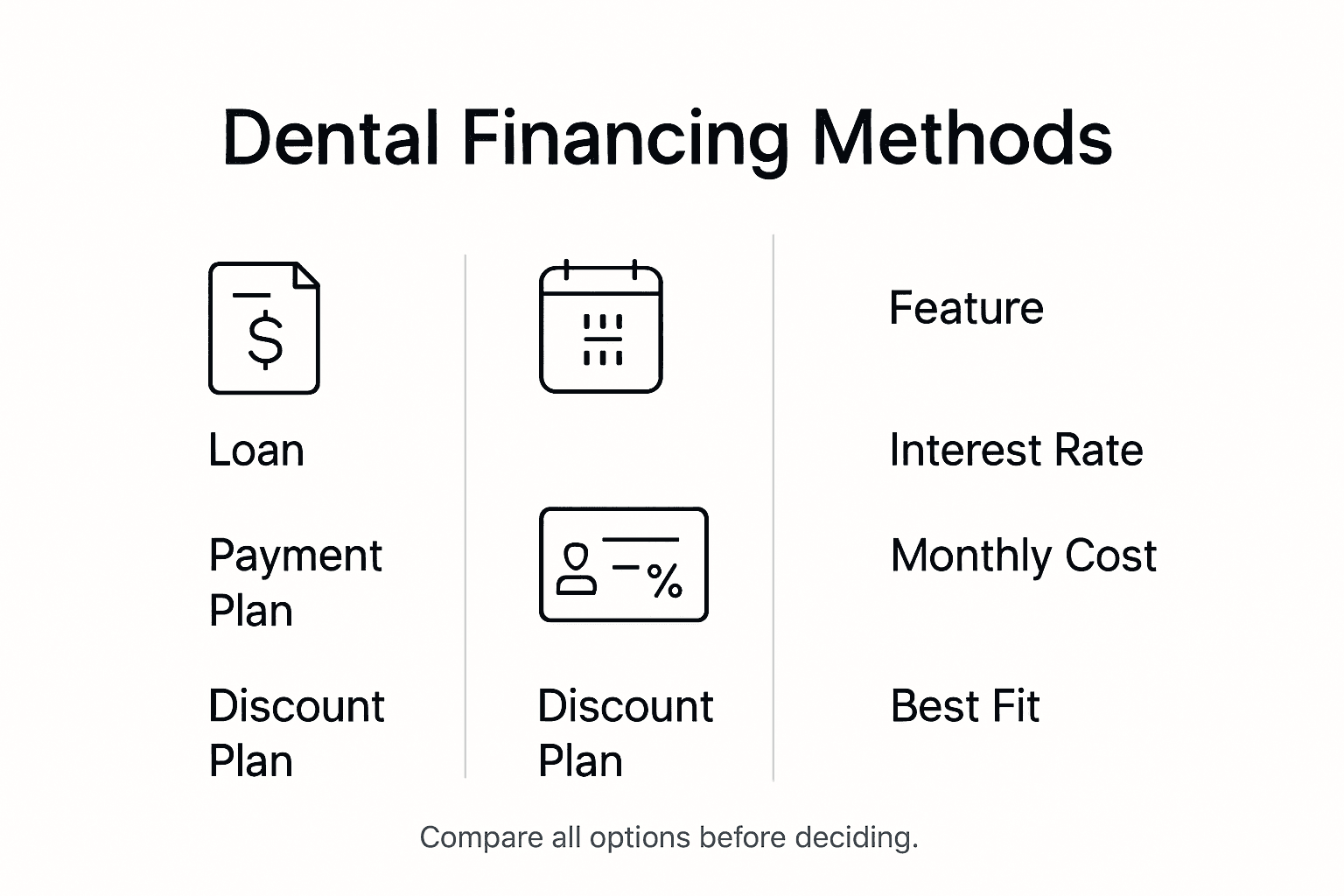
Here’s a comparison of common dental financing methods and their unique benefits:
| Financing Method | Interest Terms | Best For |
|---|---|---|
| Third-party credit line | Intro zero interest | Moderate to major procedures |
| In-office payment plan | Often no interest | Routine or minor treatments |
| Dental discount program | Instant service discounts | No loans, frequent treatments |
| Healthcare specialty loan | Fixed or variable rates | Expensive restorative work |
Pro tip: Always request a complete breakdown of financing terms and compare multiple options before committing to any dental payment plan to ensure you understand all potential fees and interest rates.
Types of Dental Loans and Payment Plans
Dental loans and payment plans offer diverse financial solutions for patients seeking comprehensive dental care. Dental loans are personal financing options designed to cover expensive medical procedures upfront, allowing patients to spread treatment costs over manageable monthly installments. These unsecured loans typically feature fixed interest rates determined by an individual’s credit score, providing flexibility for treatments not covered by traditional insurance.
Traditional dental financing includes several strategic payment models. According to the American Dental Association, these include Preferred Provider Organizations (PPO), Dental Health Maintenance Organizations (DHMO), and direct reimbursement plans. Dental insurance models vary significantly, with some offering network-based discounts while others provide comprehensive coverage for specific procedures. Patients can choose between plans that reimburse based on dollars spent or those offering predetermined fee structures.

Third-party financing represents another crucial avenue for dental care affordability. Specialized healthcare credit lines and medical lending platforms enable patients to access treatments through structured payment plans. Some options include zero-interest introductory periods, extended repayment terms, and customized financing that accommodates individual budget constraints. These approaches ensure patients can receive necessary dental treatments without experiencing immediate financial burden.
Pro tip: Always check your credit score and compare multiple financing options to secure the most favorable interest rates and repayment terms for your dental treatment.
Eligibility and Application Requirements
Dental financing options require careful evaluation of an applicant’s financial background and creditworthiness. Application processes for dental financing typically involve comprehensive documentation that demonstrates the patient’s ability to repay the loan. Most lenders will examine multiple factors including credit score, current income, debt-to-income ratio, and employment stability to determine loan eligibility and potential interest rates.
Standard documentation requirements for dental financing applications generally include proof of income, government-issued identification, recent bank statements, and employment verification. Lenders assess these materials to establish financial reliability and determine the level of risk associated with providing medical financing. Some specialized dental loan programs may have additional requirements, such as minimum credit score thresholds or specific income ranges that qualify applicants for more favorable lending terms.
The application process varies depending on the financing source, with options ranging from traditional bank loans to specialized medical credit lines and third-party healthcare financing platforms. Patients can typically expect a multi-step verification process that involves initial application submission, credit review, and final loan approval. Online applications have streamlined this process, allowing patients to receive preliminary decisions quickly and with minimal paperwork. Some financing options even provide instant pre-qualification without impacting the applicant’s credit score.
Pro tip: Gather all financial documentation in advance and check your credit report for accuracy before submitting any dental financing applications to improve your chances of approval.
Comparing Alternatives to Traditional Insurance
Dental insurance alternatives provide innovative solutions for patients seeking more flexible and affordable healthcare coverage. Policy shifts in dental care coverage highlight the limitations of traditional insurance models, which often exclude comprehensive adult dental benefits. These alternative approaches aim to address significant coverage gaps and reduce financial barriers to essential dental treatments.
Key alternatives to traditional dental insurance include dental discount plans, health savings accounts, and specialized membership programs. Dental care financing options demonstrate significant advantages over standard insurance, such as eliminating annual maximums, removing waiting periods, and providing more predictable cost structures. These alternatives offer patients greater flexibility in managing their dental healthcare expenses, with some programs allowing direct negotiation of reduced treatment costs.
Public and private sector alternatives continue to emerge, addressing the complex landscape of dental care affordability. Options like Medicaid dental benefits, state-sponsored programs, and integrated medical-dental coverage models provide additional pathways for patients struggling with traditional insurance limitations. These innovative approaches recognize dental health as an essential component of overall healthcare, moving beyond the restrictive frameworks of conventional insurance plans.
Pro tip: Compare multiple dental coverage alternatives and calculate your potential out-of-pocket expenses to find the most cost-effective solution for your specific healthcare needs.
Risks, Costs, and Common Mistakes
Dental financing involves complex financial considerations that can catch patients off guard if not carefully evaluated. Common mistakes in dental financing frequently stem from underestimating total treatment costs, overlooking hidden fees, and failing to understand the complete terms of financing agreements. Patients often make critical errors by not thoroughly examining interest rates, repayment schedules, and potential penalties associated with their chosen financing method.
Economic pressures in dental practices directly impact financing options and overall treatment costs. The dental industry’s economic landscape includes rising operational expenses, consolidation of practices, and increasing technological investments, which can translate to higher patient costs. These underlying economic factors influence everything from treatment pricing to financing terms, making it crucial for patients to understand the broader financial context of their dental care.
Risks associated with dental financing extend beyond immediate monetary concerns. Patients might encounter challenges such as credit score impacts, unexpected additional treatments, and complex loan terms that can create long-term financial strain. Some financing options include variable interest rates, early repayment penalties, and stringent qualification requirements that can complicate the patient’s financial journey. Understanding these potential pitfalls requires careful research, transparent communication with healthcare providers, and a comprehensive approach to evaluating financing alternatives.
Below is a summary of risks and mistakes to consider when financing dental care:
| Risk Type | Common Cause | Potential Impact |
|---|---|---|
| Hidden fees | Not reviewing agreements | Higher total costs |
| Variable interest | Choosing adjustable-rate loans | Unpredictable payments |
| Incomplete coverage | Overlooking treatment exclusions | Need for extra financing |
| Credit score drop | Missed/late payments | Harder future loan approval |
Pro tip: Request a detailed written breakdown of all potential costs and financing terms before committing to any dental treatment plan, and carefully read the fine print of all financing agreements.
Take Control of Your Dental Care with Flexible Financing Solutions
Going through dental treatment can feel overwhelming when cost is a concern. This article explains how dental financing options can transform expensive or unexpected procedures into manageable payments that fit your budget. At DentalAteliers.com, Dr. Kunal Narang understands these challenges and offers patient-centered care with transparent pricing and flexible payment plans designed to make quality dental services accessible for everyone in Lynnwood, WA.

Discover how you can benefit from personalized financing choices at our practice. Whether you need cosmetic procedures, implants, or routine care, our comprehensive treatment offerings come with clear pricing and patient-friendly financing details. Take the first step to improve your smile without hesitation by scheduling an appointment today from our online appointment request page. Your dental health deserves a stress-free experience supported by a warm atmosphere and expert care. Visit DentalAteliers.com now to learn more and start your journey toward confident, affordable dental care.
Frequently Asked Questions
What are dental financing options?
Dental financing options are payment solutions designed to help patients manage dental treatment costs, allowing them to receive care without immediate full payment. These can include insurance policies, payment plans, and specialized loans tailored for various dental procedures.
How do I qualify for dental financing?
Qualifying for dental financing typically involves an evaluation of your financial background, including your credit score, income, and debt-to-income ratio. Lenders will often require proof of income, identification, and employment verification as part of the application process.
What are the common risks associated with dental financing?
Common risks of dental financing include hidden fees, variable interest rates that can lead to unpredictable payments, and incomplete coverage of certain treatments. It’s essential to understand all terms before committing to a financing plan to avoid unexpected financial strain.
How do dental loans differ from payment plans?
Dental loans are typically unsecured financing options designed to cover dental expenses upfront, allowing patients to repay in monthly installments with fixed interest rates. In contrast, payment plans may be offered directly by dental offices and can often feature lower or no interest, making them ideal for routine or minor treatments.
Recommended
- 7 Types of Dental Insurance Alternatives for Affordable Care | The Dental Atelier
- How to Find Uninsured Dental Options Step by Step | The Dental Atelier
- Step-by-Step Guide to Affordable Dental Care Success | The Dental Atelier
- Dental Insurance Terms Explained: Complete Guide | The Dental Atelier
- Glow Orthodontics Langley | #1 Orthodontist in Langley, BC

.svg)