
Feeling uncertain about dental visits is common, especially when conversations are filled with unfamiliar terms. For many Lynnwood residents interested in cosmetic or advanced dental treatments, understanding dental terminology can ease nerves and lead to better outcomes. Standardized medical terminology bridges the gap between patients and dental professionals, making each conversation clearer and more supportive of your health goals. This guide will help you feel more confident by breaking down modern dental language and explaining why it matters for your care.
Table of Contents
- Defining Dental Terminology And Its Importance
- Common Procedure Terms Explained For Patients
- Diagnostic And Imaging Vocabulary You’ll Encounter
- Specialty Dentistry Terms: Implants, Crowns, And More
- Understanding Insurance, Billing, And Pricing Language
Key Takeaways
| Point | Details |
|---|---|
| Standardized Dental Terminology | Ensures clear communication among dental professionals and patients, enhancing understanding and reducing errors. |
| Importance for Patient Care | Fosters accurate documentation, precise treatment planning, and effective communication across various healthcare systems. |
| Understanding Dental Procedures | Familiarity with common terms empowers patients to engage meaningfully in their treatment discussions and decision-making. |
| Navigating Insurance Terms | Knowing insurance vocabulary helps patients make informed financial decisions and reduces confusion regarding coverage and costs. |
Defining Dental Terminology and Its Importance
Dental terminology represents a specialized language that allows healthcare professionals and patients to communicate precisely about oral health conditions, procedures, and treatments. Standardized medical terminology serves as a critical communication framework that ensures clarity, reduces misunderstandings, and promotes consistent patient care across different clinical settings.
The importance of dental terminology extends far beyond simple communication. Healthcare professionals use these standardized terms to:
- Ensure accurate documentation of patient records
- Facilitate clear communication between specialists
- Support precise diagnostic and treatment planning
- Enable seamless information exchange across healthcare systems
Professional dental terminology provides a universal language that translates complex medical concepts into understandable information. Reference terminologies like SNOMED CT create a systematic approach to describing clinical conditions, procedures, and healthcare-related topics. These standardized vocabularies help bridge communication gaps between dental professionals, researchers, and patients.
Infection control practices also depend heavily on uniform terminology. Global safety protocols require consistent language to implement and maintain high-quality dental care standards. By using precise, agreed-upon terms, dental professionals can quickly communicate critical safety information and reduce potential risks during treatments.
Here is a comparison of how proper dental terminology benefits different groups involved in oral healthcare:
| Stakeholder | Main Benefit | Example Impact |
|---|---|---|
| Patients | Greater understanding | Clear explanations of treatments |
| Dentists | Accurate communication | Fewer record-keeping errors |
| Insurance Providers | Streamlined processing | Reduced claims confusion |
| Specialists | Precise treatment plans | Easier multi-provider care |
Pro tip: Ask your dental professional to explain any unfamiliar terms during your consultation to ensure you fully understand your treatment plan.
Common Procedure Terms Explained for Patients
Navigating dental procedures can feel overwhelming, especially when confronted with complex medical terminology. Comprehensive dental glossaries help patients understand the language used during consultations, empowering them to make informed decisions about their oral healthcare.
Some of the most common dental procedure terms patients should know include:
- Extraction: Surgical removal of a tooth from its socket
- Implant: Artificial tooth root surgically placed into the jawbone
- Crown: Protective cover placed over a damaged or weakened tooth
- Root Canal: Procedure to treat infection inside a tooth’s root
- Scaling: Deep cleaning to remove plaque and tartar from teeth
Oral surgery encompasses a wide range of specialized procedures designed to address complex dental issues. Various surgical interventions can include tooth extractions, dental implants, bone grafts, and gum reconstructions. Each procedure serves a specific purpose in maintaining or restoring oral health, addressing conditions that cannot be resolved through standard dental treatments.
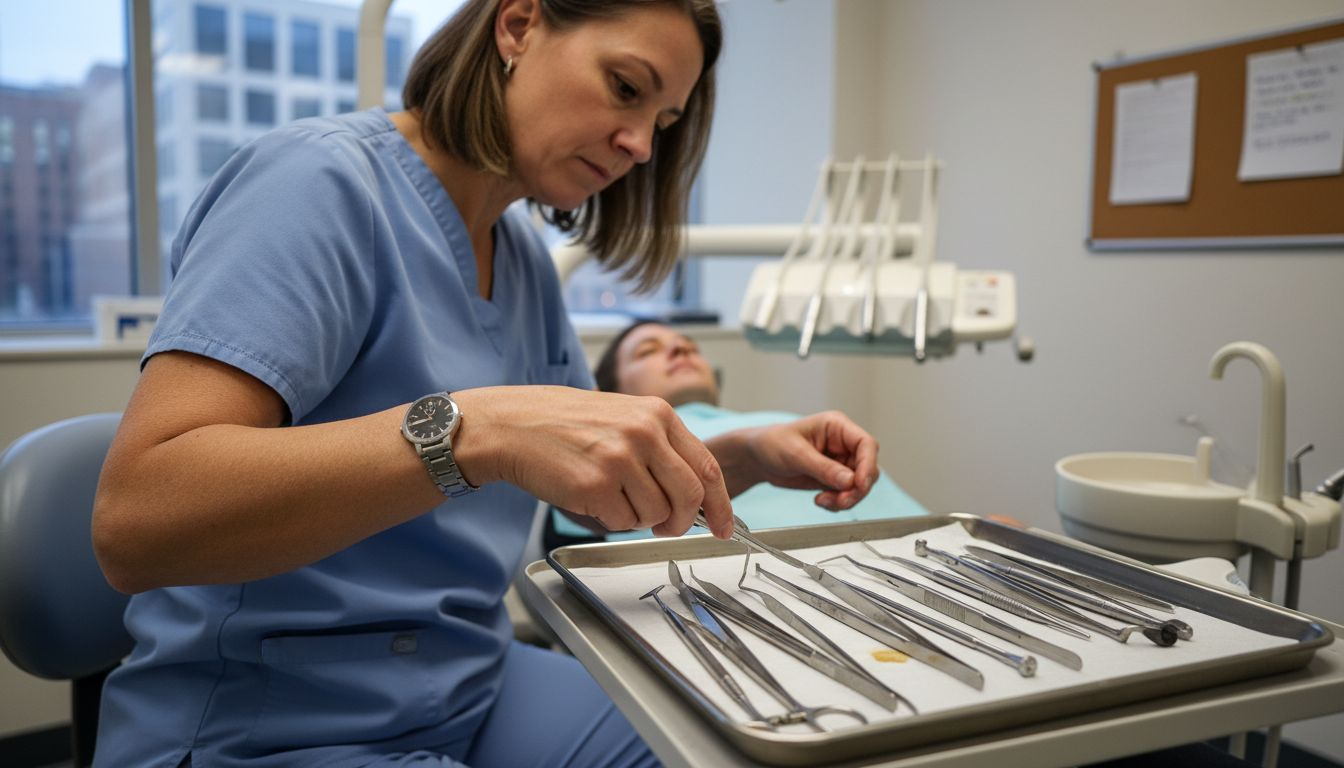
Understanding these terms helps patients communicate more effectively with their dental professionals, ask informed questions, and actively participate in their treatment planning. By familiarizing themselves with standard dental vocabulary, patients can reduce anxiety and feel more confident during dental consultations.
Pro tip: Request a brief explanation of any unfamiliar medical terms during your dental consultation to ensure complete understanding of your treatment plan.
Diagnostic and Imaging Vocabulary You’ll Encounter
Modern dental diagnostics have transformed patient care through advanced imaging technologies that provide unprecedented insights into oral health. Recent technological innovations are revolutionizing how dentists detect, diagnose, and plan treatments with remarkable precision.
Key diagnostic imaging terms patients should understand include:
- CBCT (Cone Beam Computed Tomography): 3D imaging technique that captures detailed bone and tissue structures
- Panoramic X-Ray: Full-mouth imaging showing entire dental arch in one view
- Intraoral Scanner: Digital device creating precise 3D models of teeth and gums
- Digital Radiography: Computer-generated dental imaging with reduced radiation exposure
- Optical Coherence Tomography: Non-invasive imaging technique revealing microscopic tissue details
Advanced diagnostic technologies now integrate artificial intelligence to enhance image analysis and detection capabilities. These cutting-edge tools allow dentists to identify potential issues like periodontal diseases, dental fractures, and subtle oral infections with unprecedented accuracy, often detecting problems before they become significant health concerns.

See how common dental imaging technologies differ at a glance:
| Imaging Method | What It Visualizes | Typical Use Case |
|---|---|---|
| CBCT | Bone and soft tissue (3D) | Implant planning, jaw issues |
| Panoramic X-Ray | Entire dental arch (2D) | Initial exams, growth checks |
| Intraoral Scanner | Teeth and gums (3D model) | Digital impressions for crowns |
| Digital Radiography | Teeth/bone (high detail) | Cavity and fracture detection |
| Optical Coherence Tomography | Microscopic tissues | Early tissue abnormality check |
Understanding these diagnostic terms empowers patients to engage more meaningfully in their treatment conversations. By familiarizing themselves with modern imaging vocabulary, patients can ask informed questions, comprehend complex diagnostic recommendations, and actively participate in their oral healthcare decision-making process.
Pro tip: Ask your dentist to explain any diagnostic imaging results in plain language during your consultation.
Specialty Dentistry Terms: Implants, Crowns, and More
Specialty dentistry involves complex procedures and advanced restoration techniques that go beyond routine dental care. Comprehensive dental terminology helps patients understand the intricate world of dental implants, prosthetics, and specialized treatments.
Key specialty dentistry terms patients should understand include:
- Abutment: Connector piece between dental implant and final restoration
- Bone Graft: Surgical procedure to add bone material to support implant placement
- Osseointegration: Process of implant fusing directly with jawbone
- Prosthodontics: Dental specialty focused on designing artificial tooth replacements
- Ceramic Restoration: High-precision tooth replacement using ceramic materials
Advanced prosthodontic techniques have revolutionized patient care, allowing for more precise and natural-looking dental restorations. Oral implantology specialties now integrate sophisticated surgical approaches that restore both function and aesthetic appearance, addressing complex dental challenges with unprecedented precision.
These specialized terms reflect the sophisticated medical expertise required in modern dental treatments. Understanding this vocabulary empowers patients to engage more confidently with their dental professionals, ask informed questions, and make well-informed decisions about their oral healthcare options.
Pro tip: Request a simple explanation of any technical terms during your consultation to ensure complete understanding of your treatment plan.
Understanding Insurance, Billing, and Pricing Language
Navigating dental insurance requires understanding a complex set of specialized terminology that can often feel overwhelming for patients. Comprehensive administrative terms help patients decode the intricate language of dental billing and insurance coverage.
Key insurance and billing terms every patient should understand include:
- Deductible: Amount patients pay before insurance coverage begins
- Coinsurance: Percentage of treatment cost shared between patient and insurance
- Annual Maximum: Total dollar amount insurance will pay for dental services in one year
- UCR (Usual, Customary, and Reasonable): Standard pricing benchmark for dental procedures
- Assignment of Benefits: Process where insurance payment goes directly to dental provider
Dental insurance terminology can significantly impact treatment planning and out-of-pocket expenses. National dental plan definitions provide critical insights into how insurance plans calculate coverage, helping patients make more informed financial decisions about their dental care.
Understanding these terms empowers patients to navigate complex insurance landscapes, ask informed questions, and potentially reduce unexpected medical expenses. By familiarizing themselves with this specialized vocabulary, patients can become more active participants in their healthcare financial planning.
Pro tip: Always request a detailed breakdown of your insurance coverage and ask your dental office to help interpret complex billing terms.
Master Dental Terminology With Confidence at DentalAteliers
Understanding complex dental terms like implant, osseointegration, and root canal can feel overwhelming. This article highlights how grasping precise dental language empowers you to make informed decisions and reduces anxiety around your treatment. Patient-centered care goes beyond medical jargon to ensure you feel comfortable and fully confident about your oral health journey.
At DentalAteliers, Dr. Kunal Narang’s practice prioritizes clear communication and patient education. They provide detailed explanations of procedures such as same-day crowns, All-on-4 implants, and Invisalign, helping you navigate your treatment plan with ease. Enjoy a welcoming atmosphere designed to enhance your comfort during visits through amenities like noise-canceling headphones and personal TVs.

Take control of your dental health today by visiting DentalAteliers.com to explore comprehensive treatment options and request an appointment online. Let expert guidance transform unfamiliar terminology into clear understanding, so you can experience confident, stress-free care tailored just for you.
Frequently Asked Questions
What is dental terminology and why is it important?
Dental terminology is a specialized language that healthcare professionals and patients use to communicate precisely about oral health conditions, procedures, and treatments. It is crucial for accurate documentation, clear communication, and effective patient care.
What are some common dental procedures I should know about?
Common dental procedures include extraction (removal of a tooth), implant (artificial tooth root), crown (protective cover), root canal (treatment for infection), and scaling (deep cleaning of teeth).
What imaging technologies are used in dental diagnostics?
Key imaging technologies include CBCT (3D imaging), panoramic X-rays (full-mouth view), intraoral scanners (3D teeth models), digital radiography (high-detail imaging), and optical coherence tomography (microscopic tissue details).
How can I understand my dental insurance terms better?
Familiarizing yourself with key insurance terms like deductible (amount paid before coverage), coinsurance (shared treatment costs), annual maximum (total insurance payout), UCR (standard pricing), and assignment of benefits (direct payment to provider) can help you navigate dental insurance more effectively.
Recommended
- Dental Terminology Explained: Navigating Your Visit | The Dental Atelier
- Role of Technology in Dental Care—Transforming Patient Experience | The Dental Atelier
- 7 Essential Dental Care Tips 2025 for Healthy Smiles | The Dental Atelier
- Dental Insurance Terms Explained: Complete Guide | The Dental Atelier

.svg)