
Most people are surprised to learn that over 95 percent of American dentists hold either a DDS or DMD degree, both of which demand years of rigorous education and supervised clinical training. Understanding these qualifications matters because a dentist’s credentials directly impact your safety and treatment quality. By unpacking what these academic distinctions truly mean, you can make smarter decisions about your health and recognize the high standards every American dental professional must meet.
Table of Contents
- What Dentist Qualifications Actually Mean
- Education and Dental School Pathways
- Licensing and Board Certification Process
- Common Dental Specialties and Credentials
- How Qualifications Protect Patient Safety
- Verifying Your Dentist’s Credentials Locally
Key Takeaways
| Point | Details |
|---|---|
| Understanding Dental Degrees | The primary dental degrees, DDS and DMD, have equivalent educational standards and ensure comprehensive training in oral health. |
| Ongoing Education is Essential | Dentists are required to maintain their licenses through state examinations and continuous education to remain current in their practice. |
| Specializations Require Additional Training | Dental specialties require extensive postgraduate education and certification, enhancing expertise in specific areas of practice. |
| Credential Verification is Crucial | Patients should verify a dentist’s credentials through state dental boards to ensure quality and safe dental care. |
What Dentist Qualifications Actually Mean
Dentist qualifications represent far more than just academic credentials. These specialized degrees, such as Doctor of Dental Surgery (DDS) and Doctor of Dental Medicine (DMD), signify comprehensive training in comprehensive oral health diagnostics and treatment protocols. These rigorous academic programs ensure dental professionals are equipped with the knowledge and skills necessary to provide exceptional patient care across multiple dental disciplines.
The primary dental degrees in the United States typically include two core designations: DDS and DMD. While they might sound different, these credentials are essentially equivalent, representing nearly identical educational standards and professional training. Students in these programs undergo extensive coursework covering anatomy, physiology, pathology, dental procedures, and specialized treatments. Professional dental training encompasses complex surgical techniques and preventative care methodologies, preparing graduates to handle everything from routine check-ups to advanced surgical interventions.
Beyond initial degree requirements, dentists must also complete state licensing examinations and maintain ongoing professional education. This continuous learning ensures they stay current with emerging technologies, treatment protocols, and innovative dental practices. Most states mandate specific continuing education credits to renew professional licenses, reflecting the dynamic nature of dental healthcare and the commitment to delivering cutting-edge patient care.
Here’s a summary comparing the main dental degrees awarded in the United States:
| Degree Title | Meaning | Program Length | Typical Focus |
|---|---|---|---|
| Doctor of Dental Surgery (DDS) | Emphasizes surgical techniques | 4 years | General dentistry, surgery |
| Doctor of Dental Medicine (DMD) | Equivalent academic curriculum | 4 years | Comprehensive oral health |
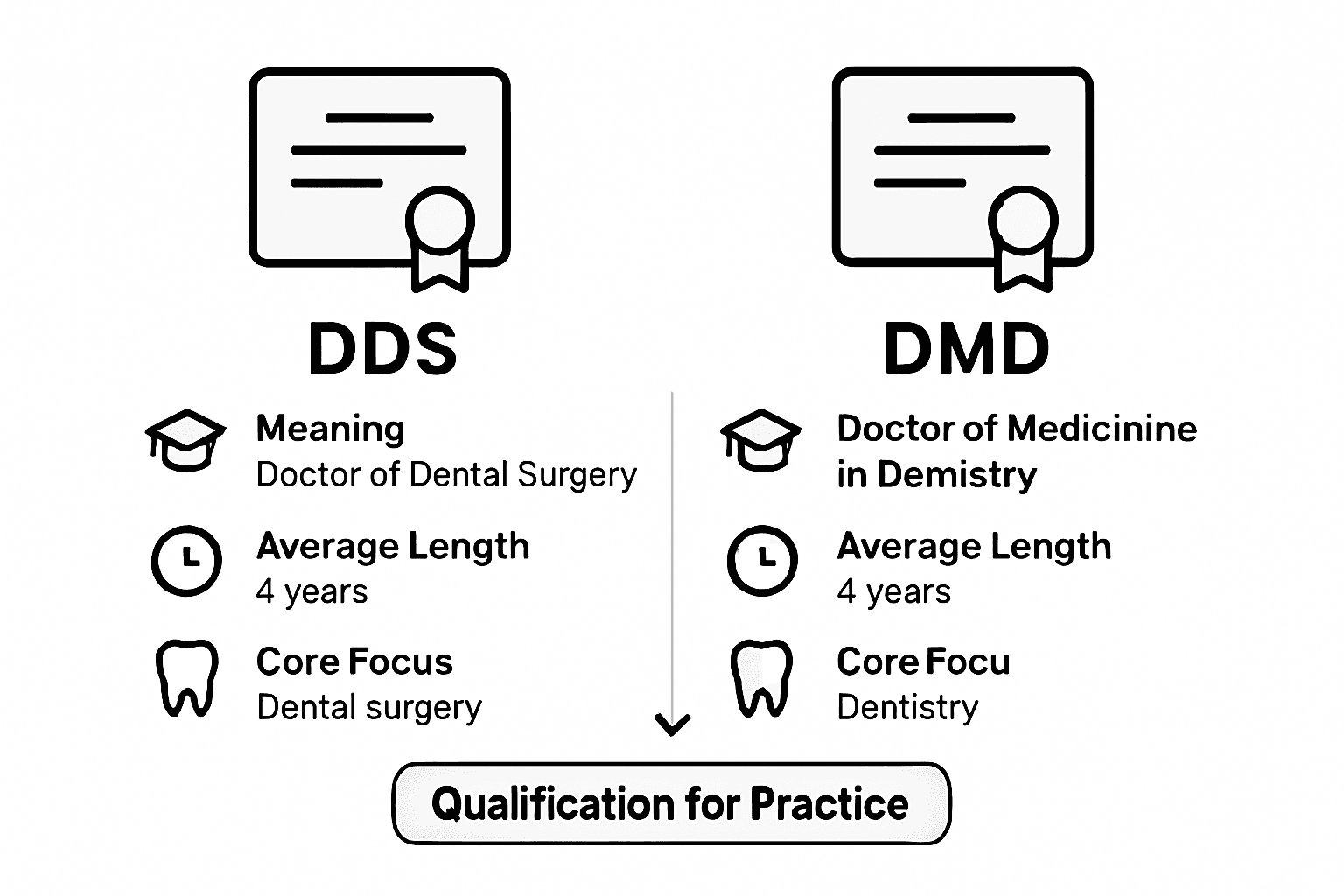
Both degrees provide equivalent qualifications for practice.
Pro Tip: Always verify a dentist’s credentials by checking their state licensing board website, which provides transparent information about their educational background, professional certifications, and any disciplinary history.
Education and Dental School Pathways
Dental school pathways represent a comprehensive and challenging educational journey designed to transform aspiring students into skilled dental professionals. Typical dental degree programs span five years of intensive academic and clinical training, covering an extensive curriculum that prepares students for the complex world of oral healthcare. These rigorous programs combine theoretical knowledge with hands-on clinical experience, ensuring graduates are fully equipped to diagnose, treat, and manage diverse dental conditions.

The core academic journey typically includes a structured progression through advanced scientific disciplines. Students undertake comprehensive coursework in human anatomy, physiology, biochemistry, microbiology, and specialized dental sciences. Dental education pathways strategically blend academic study with practical clinical experience, allowing students to develop critical skills in patient interaction, diagnostic techniques, and professional medical protocols. Some institutions even offer accelerated four-year programs for students with prior relevant qualifications, providing flexible educational routes into the dental profession.
Beyond traditional degree requirements, aspiring dentists must also navigate additional professional certification processes. This includes passing national board examinations, completing state-specific licensing requirements, and often participating in supervised clinical residencies. These additional steps ensure that dental professionals not only possess comprehensive academic knowledge but also demonstrate practical competence in real-world healthcare settings. Most dental programs also emphasize continuous professional development, encouraging graduates to stay current with emerging technologies and evolving treatment methodologies.
Pro Tip: Research dental school accreditation carefully before applying. Choosing a program accredited by recognized professional bodies ensures your education meets the highest standards and provides the most comprehensive preparation for your future dental career.
Licensing and Board Certification Process
Dental licensing represents a critical professional milestone that ensures dentists meet rigorous national and state-level standards of competency and patient care. Obtaining a dental license requires successfully completing multiple comprehensive examinations and credentialing processes, which validate a practitioner’s knowledge, clinical skills, and professional readiness. These multifaceted requirements protect patients by guaranteeing that only fully qualified professionals can practice dental healthcare.
The licensing journey typically involves several key stages. After graduating from an accredited dental program, candidates must pass the Integrated National Board Dental Examination (INBDE), a comprehensive assessment that tests theoretical knowledge and practical understanding of dental sciences. Each state maintains its own dental board with specific additional requirements, which may include clinical skills assessments, background checks, and jurisprudence examinations. National dental examining boards establish standardized criteria to ensure consistent professional competency across different regions, creating a reliable framework for patient safety and professional excellence.
Beyond initial licensing, dentists must engage in continuous professional development to maintain their credentials. Most states mandate ongoing education credits, requiring practitioners to stay current with emerging technologies, treatment protocols, and medical advances. This commitment to lifelong learning ensures that dental professionals remain at the forefront of medical innovation, continually improving their skills and adapting to new diagnostic and treatment methodologies. Some specialties, such as oral surgery or pediatric dentistry, require additional board certifications and more extensive ongoing training.
Pro Tip: Create a comprehensive professional portfolio tracking your licensing requirements, continuing education credits, and certification progress. This proactive approach helps you stay organized and ensures you never miss critical renewal deadlines or professional development opportunities.
Common Dental Specialties and Credentials
Dental specialties represent advanced areas of professional practice that require extensive additional training beyond general dentistry. Recognized dental specialties in the United States encompass a diverse range of focused healthcare disciplines, each addressing unique aspects of oral health and patient care. These specialized fields enable dentists to develop deep expertise in specific treatment approaches, diagnostic techniques, and complex medical interventions.
The primary dental specialties include Oral and Maxillofacial Surgery, Orthodontics, Periodontics, Endodontics, Pediatric Dentistry, and Prosthodontics. Each specialty demands rigorous postgraduate education and specialized certification. For instance, Oral Surgeons undergo extensive surgical training to perform complex procedures involving facial structures, while Orthodontists specialize in correcting dental alignment and bite issues. Dental specialties focus on providing targeted solutions for specific oral health challenges, ensuring patients receive precisely tailored medical care based on their unique needs.
Advanced credentials in these specialties typically require completing a doctoral degree, followed by additional residency programs ranging from two to six years. Board certification represents the pinnacle of professional achievement, involving comprehensive examinations that test advanced clinical skills, theoretical knowledge, and practical expertise. Some specialties, like Pediatric Dentistry, require unique additional training in patient communication, behavioral management, and age-specific treatment protocols, highlighting the nuanced nature of specialized dental practice.
The table below outlines major recognized dental specialties and their primary areas of expertise:
| Specialty | Main Focus | Additional Training |
|---|---|---|
| Oral and Maxillofacial Surgery | Complex facial and jaw surgery | 4-6 years residency |
| Orthodontics | Tooth alignment, bite correction | 2-3 years residency |
| Periodontics | Gum disease and implants | 2-3 years residency |
| Endodontics | Root canal and pulp therapy | 2-3 years residency |
| Pediatric Dentistry | Children’s oral health | 2-3 years residency |
| Prosthodontics | Dental prosthetics, restoration | 3 years residency |
Pro Tip: When seeking specialized dental care, always verify a practitioner’s board certification and ask about their specific training in the relevant specialty to ensure you receive the most qualified and targeted treatment.
How Qualifications Protect Patient Safety
Patient safety is the paramount concern in dental healthcare, with professional qualifications serving as the critical first line of defense. Comprehensive dental qualifications establish rigorous standards that systematically protect patients from potential medical risks, ensuring practitioners possess the necessary knowledge, skills, and ethical framework to deliver exceptional care. These multifaceted credentials go far beyond simple educational requirements, representing a sophisticated system designed to safeguard public health.
The licensure process involves multiple layers of verification to confirm practitioner competency, including extensive written examinations, clinical skill assessments, and background checks. These stringent requirements help prevent unqualified individuals from practicing and expose potential safety risks before they can impact patient well-being. Each examination stage tests not just technical knowledge, but also critical thinking, diagnostic reasoning, and professional judgment—skills essential for making complex medical decisions that directly affect patient outcomes.
Beyond initial certification, ongoing professional development and periodic credential reviews create additional safety mechanisms. State dental boards mandate continuing education credits, requiring dentists to stay current with emerging medical technologies, treatment protocols, and evolving safety standards. This commitment to lifelong learning ensures practitioners remain competent and adaptable, continuously updating their skills to match the most advanced medical practices. Professional ethics training, embedded within these qualification processes, further reinforces a culture of patient-first care, emphasizing transparency, informed consent, and responsible medical practice.
Pro Tip: Always request to see a dentist’s current professional credentials and licensure status. Reputable dental practices will gladly provide verification, demonstrating their commitment to professional transparency and patient safety.
Verifying Your Dentist’s Credentials Locally
Credential verification is a critical step in ensuring quality dental care and protecting your health. State dental boards provide comprehensive resources for patients to confirm practitioner qualifications, offering transparent and accessible methods to validate a dentist’s professional standing. These official platforms serve as reliable sources of information about a practitioner’s educational background, licensing status, and professional history.
Patients can typically verify credentials through multiple channels. National and local health regulatory bodies maintain detailed databases of licensed dental practitioners, which can be accessed online or through direct contact. These verification processes typically involve checking several key elements: current state licensure, board certification status, educational institution credentials, and any recorded disciplinary actions. Most state dental board websites offer user-friendly search tools where you can input a dentist’s name and instantly retrieve their professional verification information.
Beyond basic licensure checks, patients should consider additional verification steps. Professional memberships in organizations like the American Dental Association (ADA) provide another layer of credibility, as these associations maintain stringent membership standards. Some patients also review additional credentials such as specialty certifications, continuing education records, and professional awards. These supplementary details can offer deeper insights into a dentist’s commitment to professional excellence and ongoing skill development.
Pro Tip: Create a quick verification checklist before your first dental appointment. Request to see physical copies of licenses, verify online credentials, and don’t hesitate to ask direct questions about a dentist’s professional background and specialization.
Discover Trusted Dental Care with Verified Expertise
Understanding dentist qualifications can be overwhelming, especially when your health depends on knowledgeable and skilled professionals. This article highlights the importance of proper credentials, licensing, and specialized training in protecting your safety and ensuring exceptional dental care. If you want to experience a practice that prioritizes these standards and offers a patient-centered approach, explore care options at DentalAteliers.

Take control of your oral health today by choosing a dental team led by Dr. Kunal Narang in Lynnwood, WA, whose qualifications and specialties align perfectly with the trusted standards discussed here. Visit DentalAteliers.com for detailed information about services like root canals, implant dentistry, and cosmetic treatments. With transparent pricing, modern amenities, and seamless online appointment requests, there is no reason to wait for quality care that puts your safety and comfort first.
Frequently Asked Questions
What are the main qualifications for dentists?
Dentists typically hold either a Doctor of Dental Surgery (DDS) or a Doctor of Dental Medicine (DMD) degree, both of which represent equivalent educational standards and extensive training in oral health care.
How can I verify my dentist’s qualifications?
You can verify a dentist’s qualifications by checking with your state dental board’s website, where you can find information on their educational background, licensing status, and any disciplinary history.
What is the process of obtaining a dental license?
The process involves graduating from an accredited dental program, passing the Integrated National Board Dental Examination (INBDE), and meeting any additional state-specific requirements, such as background checks and clinical skills assessments.
What are some common dental specialties and their focuses?
Common dental specialties include Oral and Maxillofacial Surgery (surgery involving the jaw and facial structures), Orthodontics (alignment and bite correction), Periodontics (gum disease treatment), and Pediatric Dentistry (children’s oral health).
Recommended
- Role of Continuing Education in Dentistry Explained | The Dental Atelier
- 7 Common Dental Procedures Everyone Should Know About | The Dental Atelier
- Role of Dental Hygiene – Impact on Lifelong Oral Health | The Dental Atelier
- 7 Essential Dental Care Tips 2025 for Healthy Smiles | The Dental Atelier
- Verdachtsdiagnose – Was Sie als Patient wissen müssen
- The Secret to Brushing Your Teeth Better: A Game-Changer You Need to Know About – Wispa Luxury

.svg)