
Facing a dental appointment in Lynnwood can be stressful if just the thought of sounds or smells triggers your nerves. For many adults, real comfort comes from understanding their choices and finding tailored solutions. Exploring sedation dentistry offers practical ways to address dental anxiety and enhance your experience during cosmetic or restorative treatments. Discover firsthand how careful assessment, clear communication, and planning can help you feel safe and cared for every step of the way.
Table of Contents
- Step 1: Assess Your Need for Sedation Dentistry
- Step 2: Research Sedation Options and Eligibility
- Step 3: Contact the Dental Office to Discuss Sedation
- Step 4: Share Medical History and Preferences
- Step 5: Confirm Sedation Arrangements Before Your Appointment
Quick Summary
| Key Point | Explanation |
|---|---|
| 1. Assess Your Dental Anxiety | Reflect on past experiences to determine anxiety triggers, which helps in creating an effective sedation plan. |
| 2. Research Sedation Techniques | Understand the different sedation options and their uses to make an informed decision for your procedure. |
| 3. Communicate with Your Dentist | Discuss your medical history and anxiety with your dental office to address your specific sedation needs. |
| 4. Disclose Medical History | Provide detailed health information to ensure a tailored and safe sedation strategy for your dental treatment. |
| 5. Confirm Arrangements Before Appointment | Verify sedation details, fasting instructions, and transportation plans to ensure a smooth dental visit. |
Step 1: Assess Your Need for Sedation Dentistry
Determining whether sedation dentistry is right for you involves a thoughtful evaluation of your personal dental experience, anxiety levels, and medical history. The first step in this process is understanding your unique comfort requirements and potential sedation options.
Carefully assess your dental anxiety by reflecting on past experiences and identifying specific triggers that make dental procedures challenging. Some patients experience intense anxiety from sounds, smells, or the anticipation of potential discomfort. Dental anxiety management techniques recommend recognizing whether your anxiety stems from general apprehension or specific procedural fears. Medical professionals distinguish between trait anxiety (a persistent fear of dental treatments) and state anxiety (situational nervousness during specific procedures).
Consult with dental professionals who can provide a comprehensive evaluation of your sedation needs. A thorough assessment will examine your medical history, current health status, medication interactions, and specific anxiety levels to determine the most appropriate sedation approach. This personalized strategy ensures your comfort and safety during dental treatments.
Pro tip: Keep a detailed record of your past dental experiences and specific anxiety triggers to help your dentist create the most effective sedation plan.
Step 2: Research Sedation Options and Eligibility
Researching sedation options requires a comprehensive understanding of available techniques, their specific applications, and your individual health considerations. This step will help you navigate the complex landscape of dental sedation methods and determine which approach best suits your needs.
Explore the various sedation techniques recommended by dental professionals. Sedation options for dental procedures typically range from minimal sedation to deep sedation, each with distinct characteristics and appropriate use cases. These methods include oral sedation, inhalation sedation with nitrous oxide, and intravenous sedation. Understanding the nuances between these approaches will help you make an informed decision about your dental treatment.
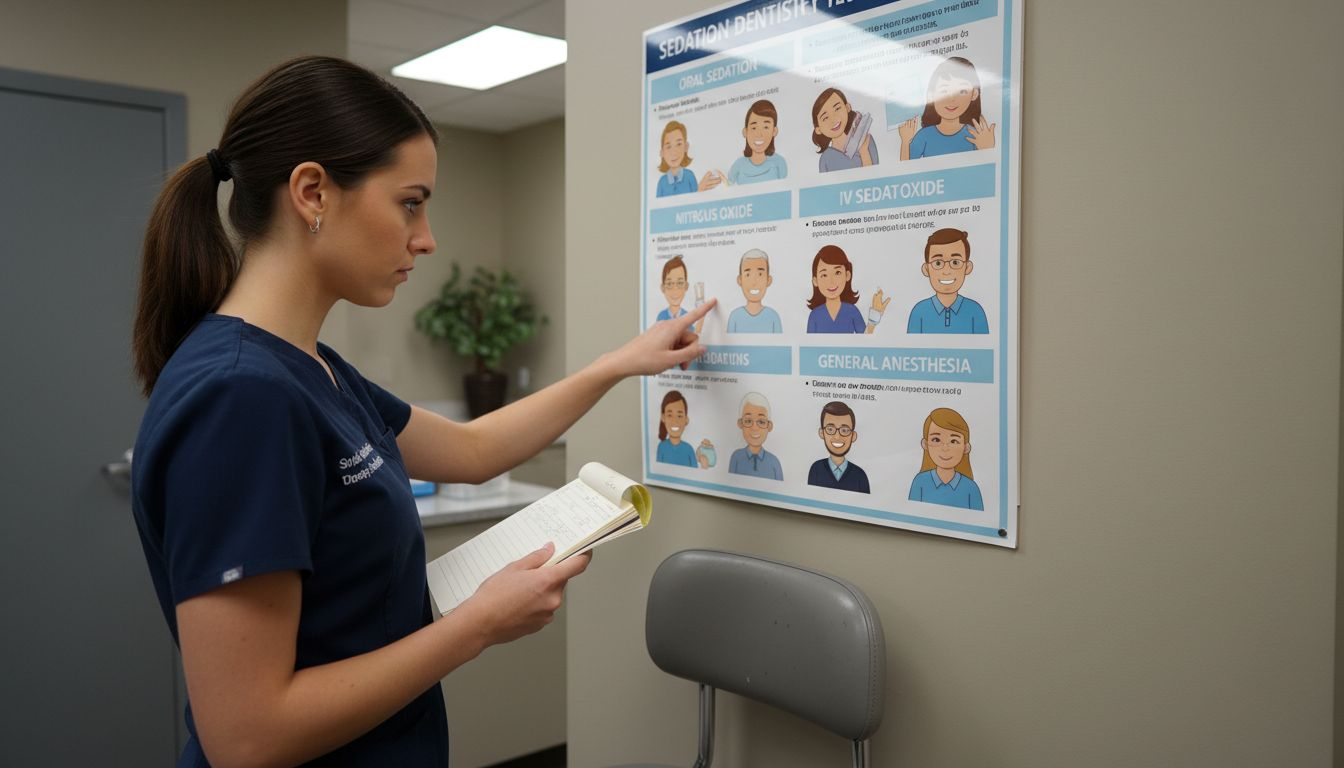
Consider your personal medical history and discuss potential eligibility with your dental professional. Each sedation method has specific contraindications and requirements based on factors like overall health, current medications, and previous medical experiences. A thorough consultation will help determine which sedation technique provides the safest and most comfortable experience for your specific dental procedure.
Pro tip: Prepare a comprehensive medical history document and list of current medications to facilitate a more accurate sedation eligibility assessment during your dental consultation.

Here’s a quick reference comparing common dental sedation methods and their unique characteristics:
| Sedation Method | Level of Consciousness | Typical Use Cases | Key Benefits |
|---|---|---|---|
| Oral sedation | Relaxed, awake | Mild to moderate anxiety | Easy administration |
| Nitrous oxide (gas) | Fully conscious | Quick procedures, children | Fast recovery, adjustable |
| IV sedation | Drowsy or semi-conscious | Complex or lengthy treatments | Deeper relaxation, precise |
| Deep sedation | Unconscious or unaware | Major surgery, severe dental fear | No memory of procedure |
Step 3: Contact the Dental Office to Discuss Sedation
Reaching out to your dental office about sedation requires careful preparation and clear communication. This critical step will help you understand the specific sedation options available and ensure your individual needs are fully addressed.
Effective patient communication with dental services is key to a successful sedation experience. When you contact the dental office, be prepared to discuss your medical history, specific anxieties, and treatment goals in detail. Ask about the range of sedation methods they offer, their recommended approach for your particular procedure, and the credentials of practitioners who will administer sedation. Request information about potential side effects, recovery expectations, and any preparatory steps you need to take before your appointment.
Schedule a comprehensive consultation that allows ample time to explore your sedation concerns thoroughly. During this conversation, be transparent about your medical conditions, current medications, and any previous experiences with sedation or dental procedures. This open dialogue will help the dental team customize a sedation plan that maximizes your comfort and safety.
Pro tip: Compile a list of questions and your complete medical history before calling to ensure a productive and thorough discussion about your sedation options.
Step 4: Share Medical History and Preferences
Disclosing your comprehensive medical history is a critical step in ensuring safe and personalized sedation during dental procedures. This process helps your dental team develop the most appropriate sedation strategy tailored specifically to your individual health needs.
Medical history documentation for sedation plays a crucial role in determining your sedation eligibility and safety. Be prepared to provide detailed information about your current medications, including prescription drugs, over the counter medications, supplements, and herbal remedies. Include a thorough account of any existing medical conditions such as heart disease, respiratory issues, diabetes, or neurological disorders. Disclose any previous adverse reactions to medications or anesthesia, allergies, and your complete surgical history.
Be transparent and specific about your personal preferences and anxiety levels. Explain any specific concerns or past experiences that contribute to your dental anxiety. This information helps your dental team understand your emotional and physical needs, allowing them to select the most appropriate sedation method. By providing a comprehensive overview of your health and preferences, you enable your dental professionals to create a customized sedation plan that maximizes your comfort and minimizes potential risks.
Pro tip: Create a written summary of your medical history before your consultation to ensure you do not accidentally omit any critical health information.
Step 5: Confirm Sedation Arrangements Before Your Appointment
Confirming your sedation arrangements is the final critical step in ensuring a smooth and stress free dental procedure. This process helps you feel prepared and eliminates potential last minute complications that could disrupt your treatment plan.
Sedation preparation protocols require patients to verify multiple important details before their appointment. Contact your dental office to confirm the specific type of sedation planned for your procedure, including the method of administration and expected duration. Discuss precise fasting instructions, as most sedation techniques require you to avoid food and drink for a specific timeframe before your appointment. Verify transportation arrangements, confirming that you will have a responsible adult available to escort you home after the procedure, as sedation can impair your ability to drive safely.
Review all preoperative instructions carefully and ask your dental team about any medications you should continue or temporarily stop before sedation. This includes prescription drugs, over the counter medications, and supplements that might interact with sedation agents. Clarify any specific clothing recommendations, arrival time, and expected duration of your entire dental visit. By systematically confirming these details, you create a comprehensive understanding of your sedation experience and reduce potential anxiety about the unknown.
Pro tip: Create a checklist of all confirmation details and keep it readily available on the day of your appointment to ensure you do not miss any critical instructions.
Use this summary to organize what to prepare before your sedation dentistry appointment:
| Preparation Task | Why It Matters | Tip for Success |
|---|---|---|
| Complete health history | Ensures safety and eligibility | Write details ahead of visit |
| List all medications | Prevents adverse interactions | Include prescriptions and supplements |
| Arrange transportation | Required after most sedations | Confirm a responsible adult |
| Clarify instructions | Reduces last minute confusion | Make a checklist for appointment |
Discover a Stress-Free Dental Visit with Expert Sedation Care
If dental anxiety or past uncomfortable experiences have kept you from getting the care you need sedation dentistry may be the solution you have been searching for. This article highlights common challenges such as managing intense dental fears and understanding sedation options like oral sedation or intravenous sedation that fit your health profile. At DentalAteliers.com we understand the importance of creating a calm environment tailored to your unique comfort needs by combining advanced sedation techniques with a welcoming atmosphere featuring amenities like noise-canceling headphones and TVs.
Take the next step toward a stress-free dental experience by exploring our detailed sedation dentistry services and hearing from patients who have overcome anxiety with our compassionate approach. Schedule your personalized consultation today to share your medical history and preferences so Dr. Kunal Narang and his team can design the safest sedation plan just for you. Visit DentalAteliers.com now to request your appointment and start your journey to confident dental care.
Frequently Asked Questions
How do I assess my need for sedation dentistry?
To assess your need for sedation dentistry, reflect on your past dental experiences and identify specific triggers that cause anxiety. Write down your experiences and discuss these with your dentist to help them create an effective sedation plan.
What sedation options are available for dental procedures?
Sedation options typically include oral sedation, nitrous oxide (gas), IV sedation, and deep sedation. Research these methods and discuss them with your dental professional to determine which option best suits your needs and comfort level.
What should I discuss when contacting my dental office about sedation?
When contacting your dental office, discuss your medical history, existing anxieties, and treatment goals. Prepare a list of questions regarding sedation methods, side effects, and recovery expectations to ensure a thorough conversation.
How can I prepare my medical history for a sedation dentistry consultation?
Prepare your medical history by documenting your current medications, any existing health conditions, and past reactions to sedation or anesthesia. Bring this written summary to your consultation to help your dental team create a safe and customized sedation plan.
What steps should I take to confirm my sedation arrangements before my appointment?
Confirm your sedation arrangements by verifying the type of sedation planned, fasting instructions, and transportation needs. Create a checklist of all confirmation details and review them prior to your appointment to minimize last-minute confusion.

.svg)