
Over 2 million American adults receive dental implants each year, yet many do not realize that bone grafting is often a crucial part of the process. Addressing bone loss is a significant step for those wanting a healthy, lasting smile, especially after injury or prolonged tooth loss. With the latest advances in dental restoration, understanding how bone grafting supports strong implant results can empower patients to make better choices about their oral health.
Table of Contents
- Bone Grafting Explained for Dental Restoration
- Types of Bone Grafts and Their Uses
- How Bone Grafting Supports Dental Implants
- Risks, Recovery, and Patient Considerations
- Costs and Alternatives for Patients
Key Takeaways
| Point | Details |
|---|---|
| Importance of Bone Grafting | Bone grafting is essential for rebuilding lost bone tissue, creating a stable foundation for dental implants and restoring oral function. |
| Types of Grafts | Different graft types, including autografts, allografts, xenografts, and synthetic materials, have unique benefits tailored to patient needs. |
| Healing Process | Recovery from bone grafting typically takes 3-9 months, during which the grafting material integrates into existing bone for lasting support. |
| Patient Considerations | Open communication with dental professionals is crucial for understanding risks, recovery expectations, and financial options related to bone grafting. |
Bone Grafting Explained for Dental Restoration
Bone grafting represents a sophisticated surgical technique enabling dental professionals to rebuild and regenerate lost bone tissue in patients requiring dental implants. When natural bone volume has diminished due to injury, disease, or prolonged tooth loss, bone grafting becomes a critical restoration strategy that provides a stable foundation for dental implant placement.
The process involves transplanting bone material into areas of significant bone loss, creating a robust scaffolding that stimulates natural bone regeneration. Dental professionals utilize several graft types, including autografts (sourced from patient’s own body), allografts (donor human bone), xenografts (animal-derived bone material), and synthetic bone substitutes. Each graft type offers unique advantages depending on the patient’s specific anatomical requirements and healing potential.
Successful bone grafting requires meticulous surgical technique and understanding of bone biology. Grafted bone materials gradually integrate with existing bone tissue through a complex process called osseointegration, where new bone cells replace the grafted material. This regenerative mechanism allows dentists to rebuild compromised jaw structures, providing patients with renewed opportunities for dental restoration and improved oral function. The healing process typically ranges from 3-9 months, during which the grafted site transforms into strong, healthy bone capable of supporting dental implants.
Patients considering dental implants after significant bone loss should understand that modern bone grafting techniques offer remarkable reconstruction possibilities. By working closely with experienced dental professionals, individuals can explore personalized treatment strategies that restore not just dental function, but also confidence in their smile’s appearance and structural integrity.
Types of Bone Grafts and Their Uses
Dental professionals employ multiple bone graft types to address diverse patient needs, with each material offering unique characteristics and clinical advantages. Comprehensive research in implant dentistry reveals four primary bone graft categories: autografts, allografts, xenografts, and synthetic bone substitutes, each designed to restore and regenerate bone tissue for successful dental implant placement.
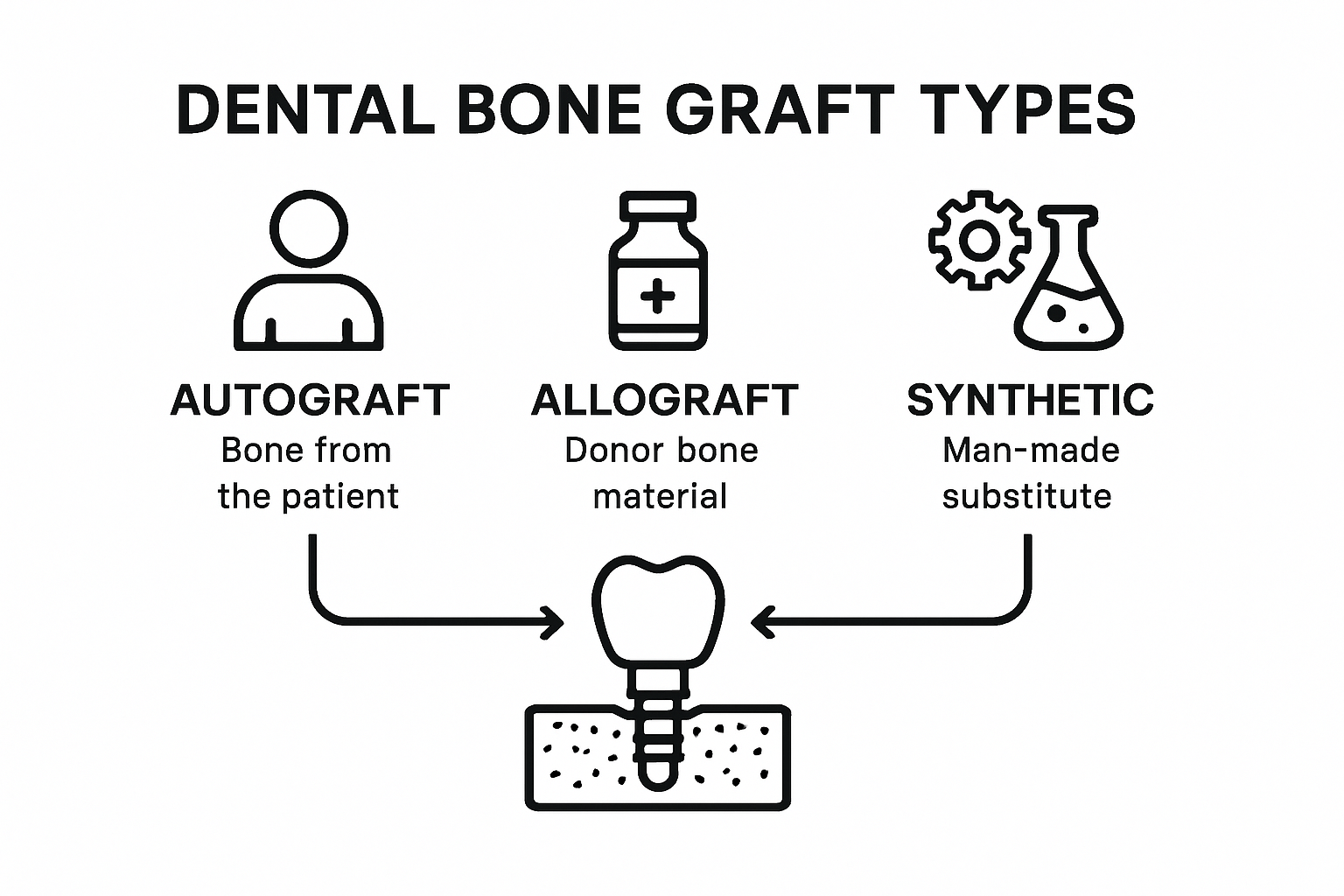
Autografts represent the gold standard in bone grafting, utilizing bone harvested directly from the patient’s own body, typically from areas like the hip or jaw. These grafts offer exceptional compatibility and biological performance, with the highest success rates in bone regeneration. Allografts, sourced from human donor bone tissue, provide an alternative when patient-specific tissue is unavailable, offering similar regenerative potential with reduced surgical complexity. Xenografts, derived from animal sources such as bovine bone, serve as an additional option with proven biocompatibility and predictable healing characteristics.
Advanced bone grafting materials demonstrate remarkable potential for restoring complex dental structures, with synthetic alloplastic materials expanding treatment possibilities. These engineered bone substitutes include bioactive ceramics, calcium phosphate compounds, and hydroxyapatite, which mimic natural bone properties while eliminating donor site complications. Dental professionals carefully select graft materials based on individual patient factors such as bone density, healing capacity, and specific anatomical requirements.
The selection of an appropriate bone graft material requires sophisticated clinical judgment. Factors like patient age, overall health, existing bone volume, and the specific location of implant placement significantly influence the grafting strategy. Modern dental practices prioritize personalized treatment approaches, ensuring that each patient receives a tailored bone grafting solution that maximizes the potential for successful dental implant integration and long-term oral health restoration.
How Bone Grafting Supports Dental Implants
Bone augmentation techniques play a critical role in ensuring successful dental implant procedures, addressing fundamental challenges of inadequate bone volume and density. When patients experience significant bone loss due to factors like prolonged tooth extraction, periodontal disease, or natural aging, bone grafting becomes an essential preparatory step for dental implant placement. This sophisticated surgical approach creates a robust foundation that supports long-term implant stability and integration.
The primary mechanism of bone grafting involves rebuilding compromised jaw structures through strategic material placement. Bone regeneration occurs as the grafted material acts as a scaffold, stimulating the patient’s natural bone-forming cells to generate new, healthy bone tissue. Dental professionals utilize advanced bone substitutes to reconstruct bone-deficient areas, effectively increasing bone volume and providing the necessary structural support for dental implants. This process allows patients with previously unsuitable bone conditions to become candidates for dental restoration.

Critical factors influencing bone graft success include patient health, graft material selection, surgical precision, and post-operative care. Dentists carefully evaluate bone density, healing potential, and anatomical considerations to develop personalized grafting strategies. The healing process typically ranges from 3-6 months, during which the grafted material gradually transforms into viable, strong bone capable of supporting dental implants with exceptional long-term stability.
Successful bone grafting extends beyond mere structural reconstruction. It represents a transformative approach that restores not just dental function, but patient confidence. By creating a solid foundation for implants, bone grafting enables individuals with significant bone loss to regain their ability to eat, speak, and smile with renewed assurance, ultimately improving overall quality of life and oral health.
Risks, Recovery, and Patient Considerations
Patient perspectives play a crucial role in understanding the complexities of dental bone grafting procedures, requiring careful evaluation of potential risks, recovery expectations, and individual medical considerations. While bone grafting represents an advanced surgical technique with high success rates, patients must be fully informed about the potential challenges and healing process associated with this transformative dental intervention.
Potential risks associated with bone grafting include infection, graft rejection, surgical complications, and healing difficulties. Comprehensive medical assessments help dental professionals identify and mitigate potential challenges in bone graft procedures, ensuring patient safety and optimal outcomes. Recovery typically involves careful management of post-surgical symptoms, including mild discomfort, swelling, and temporary restrictions on certain dietary and physical activities. Patients can expect a healing period ranging from 3-6 months, during which the grafted bone gradually integrates with existing jaw structures.
Successful bone graft recovery depends on several critical patient factors, including overall health, age, immune system function, and adherence to post-operative instructions. Dental professionals recommend specific protocols to support healing, such as maintaining excellent oral hygiene, avoiding smoking, managing underlying health conditions, and attending all follow-up appointments. Patients with diabetes, autoimmune disorders, or compromised healing capabilities may require additional monitoring and personalized treatment strategies.
Making an informed decision about bone grafting requires open communication between patients and dental professionals. Individuals should discuss their medical history, treatment expectations, potential risks, and financial considerations thoroughly. While the procedure represents a significant investment in long-term oral health, patients must carefully weigh the benefits against potential complications, ensuring they feel confident and comfortable with their chosen dental restoration approach.
Costs and Alternatives for Patients
Dental bone grafting represents a significant financial investment that requires careful consideration of multiple treatment options, with costs typically ranging from $500 to $3,000 depending on the complexity of the procedure and type of graft material used. Patients must evaluate their individual dental needs, budget constraints, and long-term oral health goals when exploring bone grafting and dental implant strategies.
Cost variations depend on several critical factors, including the specific bone graft technique, amount of bone loss, donor material selection, and geographic location. Comprehensive prosthodontic assessments help patients understand the full spectrum of potential treatment alternatives, ranging from traditional bone grafting to more advanced regenerative techniques. Autografts tend to be more expensive due to the surgical complexity of harvesting bone from the patient’s own body, while synthetic and allograft materials may offer more affordable alternatives with comparable clinical outcomes.
Patients exploring dental restoration options should consider multiple financial strategies to manage bone grafting expenses. Many dental practices offer payment plans, financing options, and membership programs that can significantly reduce out-of-pocket costs. Some patients may qualify for dental insurance coverage or supplemental health care financing, though coverage for bone grafting procedures varies widely. Alternative approaches like mini dental implants, removable prosthetics, or phased treatment plans can provide more budget-friendly options for individuals with financial constraints.
Ultimately, the decision to pursue bone grafting involves balancing medical necessity, long-term oral health objectives, and financial feasibility. Patients are encouraged to schedule comprehensive consultations with dental professionals who can provide personalized assessments, transparent cost breakdowns, and tailored recommendations that align with individual clinical needs and budgetary considerations. By carefully exploring all available options, individuals can make informed decisions that optimize both their dental health and financial well-being.
Restore Your Smile with Expert Bone Grafting at Dental Ateliers
Significant bone loss can feel like a roadblock to achieving the stable, beautiful dental implants you deserve. The challenge of inadequate jaw bone volume often causes uncertainty and hesitation about moving forward with dental restoration. Understanding the critical role of bone grafting in rebuilding your bone foundation is the first step toward renewed confidence and lasting oral health. With techniques like autografts and synthetic bone substitutes, we tailor solutions to your unique needs and ensure successful osseointegration that supports implant stability.

Discover how the experienced team at DentalAteliers.com transforms complex dental implant cases into success stories through personalized bone grafting strategies. Explore the benefits of advanced dental implants, learn more about our comprehensive services, and read inspiring patient testimonials. Don’t let bone loss delay your smile restoration. Take the next step today by scheduling a consultation designed to address your concerns and map out a clear, comfortable path to durable dental implants.
Frequently Asked Questions
What is bone grafting in dental restoration?
Bone grafting is a surgical technique used to rebuild and regenerate lost bone tissue, providing a stable foundation for dental implants when natural bone volume is insufficient due to injury, disease, or tooth loss.
What types of bone grafts are available for dental implants?
The main types of bone grafts include autografts (from the patient’s body), allografts (donor human bone), xenografts (animal-derived bone), and synthetic bone substitutes, each with unique advantages depending on the patient’s needs.
How does bone grafting improve the success of dental implants?
Bone grafting enhances the success of dental implants by creating a robust foundation through bone regeneration, which improves implant stability and integration, especially in patients with significant bone loss.
What factors affect the healing process after a bone graft procedure?
Healing after a bone graft relies on several factors including the patient’s overall health, age, immune system function, adherence to post-operative care, and the specific characteristics of the graft material used.
Recommended
- What Affects Dental Bone Graft Healing Time? Key Factors Explained | The Dental Atelier
- Dental Implants with Bone Loss: What Are Your Options? | The Dental Atelier
- Dental Implant Terminology Explained: Complete Guide | The Dental Atelier
- Dental Implants Explained: Benefits, Types, and Cost | The Dental Atelier

.svg)