
More than one third of American adults say dental fear keeps them from getting the care they need. For many, just thinking about a dental appointment triggers anxious thoughts and physical discomfort. Sedation dentistry offers a proven path to comfortable, stress-free visits by easing both anxiety and pain. Discover how this specialized approach can transform even the most challenging dental experiences into calm and manageable moments.
Table of Contents
- What Sedation Dentistry Means
- Types Of Sedation Used
- Why Sedation Eases Anxiety And Pain
- Efficiency And Precision Benefits
- Safety Considerations And Risks
Key Takeaways
| Point | Details |
|---|---|
| Sedation Dentistry Overview | Sedation dentistry uses medications to help patients relax during dental procedures while maintaining consciousness and communication with dental professionals. |
| Types of Sedation Techniques | Various sedation methods exist, including nitrous oxide, oral, and intravenous sedation, tailored to individual patient needs and the complexity of the procedures. |
| Benefits of Sedation | Sedation dentistry improves patient comfort, enables complex dental treatments with enhanced precision, and reduces the number of required appointments. |
| Safety Protocols | Rigorous safety protocols and monitoring are essential in sedation dentistry to minimize risks and ensure patient well-being throughout dental procedures. |
What Sedation Dentistry Means
Sedation dentistry is a specialized approach designed to help patients overcome dental anxiety and receive necessary dental treatments with minimal stress. Conscious sedation techniques provide a safe method for reducing patient fear while maintaining communication and awareness during dental procedures.
At its core, sedation dentistry involves using carefully administered medications that help patients relax without losing complete consciousness. Patients remain responsive and can communicate with their dental professionals, but experience significantly reduced anxiety and physical tension. Medical professionals use different sedation levels ranging from minimal sedation (where patients are relaxed but fully awake) to deep sedation (where patients are on the edge of consciousness but can still be awakened).
The primary goals of sedation dentistry extend beyond simple relaxation. These techniques enable patients with severe dental phobias, complex medical histories, or those requiring extensive treatments to receive high-quality dental care comfortably. Whether managing a lengthy procedure or helping an anxious patient through a routine check-up, sedation dentistry transforms potential sources of stress into manageable, even pleasant, medical experiences. Techniques can include oral medication, nitrous oxide (laughing gas), intravenous sedation, and general anesthesia, each carefully selected based on individual patient needs and medical background.
Types Of Sedation Used
Dental professionals employ multiple sedation techniques designed to match patient needs and procedure complexity. These methods range from minimal intervention approaches to more comprehensive sedation strategies, allowing patients with varying anxiety levels and medical backgrounds to receive comfortable dental care.
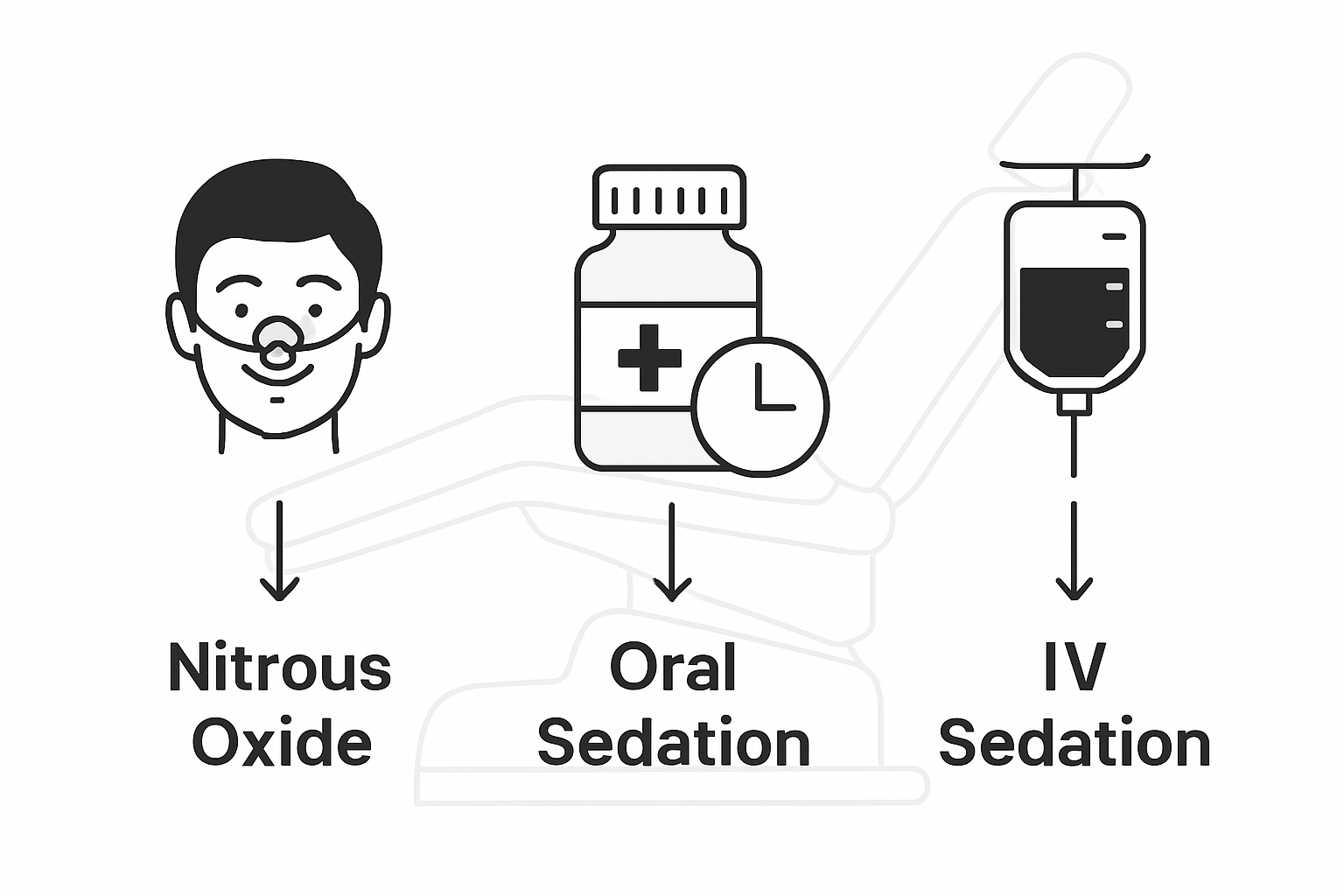
Nitrous Oxide Sedation represents one of the most common and accessible sedation methods. Patients inhale a carefully measured mix of nitrous oxide and oxygen through a small mask, creating a relaxed state while remaining fully conscious. Inhalation sedation is particularly effective for children, young adults, and individuals with mild to moderate dental anxiety.
Additional sedation types include oral sedation and intravenous sedation. Oral sedation involves taking prescribed medication prior to the dental procedure, typically using medications like diazepam to reduce anxiety and create a calming effect. Intravenous sedation delivers medication directly into the bloodstream, providing a deeper level of relaxation and typically used for more complex dental treatments or patients with severe dental phobias. Each sedation approach is carefully selected based on individual patient requirements, medical history, and the specific dental procedure being performed.
Why Sedation Eases Anxiety And Pain
Conscious sedation techniques provide a powerful solution for managing dental anxiety and pain by creating a calm psychological environment that transforms patient experiences. By addressing both emotional and physical discomfort, sedation dentistry helps individuals overcome deep-seated fears and barriers that traditionally prevent them from seeking necessary dental care.
Psychological Mechanisms play a critical role in sedation’s effectiveness. The medications used trigger neurochemical responses that reduce stress hormones, helping patients feel more relaxed and less threatened during dental procedures. For individuals with intense dental phobias, these interventions can mean the difference between avoiding treatment altogether and receiving essential healthcare.
Beyond psychological benefits, sedation dentistry provides practical advantages for patients with specific medical challenges. Patients with sensitive gag reflexes, difficulty controlling movements, or extreme anxiety can now receive comprehensive dental treatments without experiencing overwhelming stress. The ability to remain calm and cooperative allows dentists to perform more complex procedures efficiently, ultimately improving overall treatment outcomes and patient satisfaction.
Efficiency And Precision Benefits
Dental sedation dramatically enhances procedural efficiency and precision, transforming complex dental treatments into streamlined experiences for both patients and practitioners. By creating a controlled and calm environment, sedation techniques enable dentists to work with greater focus and accuracy, reducing the potential for interruptions or complications during intricate procedures.
Treatment Consolidation emerges as a significant advantage of sedation dentistry. Sedation can reduce the total number of appointments needed for comprehensive dental work, allowing multiple procedures to be completed in fewer visits. This approach not only saves patients valuable time but also minimizes the cumulative stress associated with repeated dental interventions.
Precision in dental treatments requires patients to remain still and cooperative, which sedation inherently facilitates. Patients under sedation experience reduced involuntary movements, muscle tension, and reflexive responses, enabling dentists to perform delicate procedures with enhanced accuracy. This increased stability is particularly crucial for complex treatments like dental implants, root canals, or extensive reconstructive work, where even minimal patient movement can impact the overall treatment outcome.
Safety Considerations And Risks
Safety protocols in dental sedation represent a critical component of patient care, requiring meticulous attention to detail and comprehensive medical evaluation. Dental professionals must conduct thorough pre-sedation assessments, including comprehensive medical history reviews, current medication analyses, and individual risk factor screenings to determine patient suitability for sedation techniques.
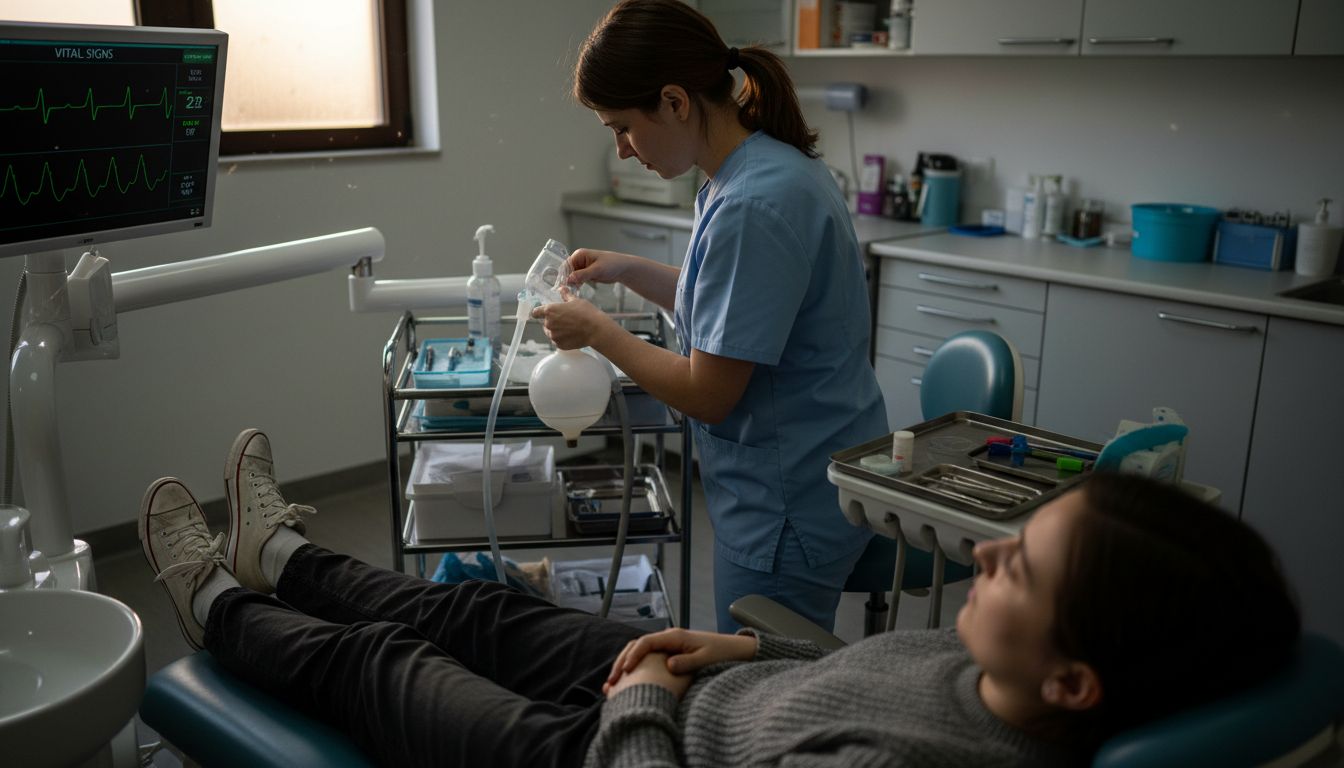
Monitoring Protocols play a fundamental role in maintaining patient safety during sedation. Dental practitioners must remain vigilant, continuously tracking vital signs such as heart rate, blood oxygen levels, and respiratory function throughout the procedure. Potential risks including respiratory depression and unexpected allergic reactions necessitate advanced emergency preparedness, with practitioners required to have immediate access to resuscitation equipment and comprehensive emergency intervention strategies.
Patient selection becomes paramount in minimizing sedation-related risks. Individuals with certain medical conditions such as respiratory disorders, cardiovascular complications, or significant obesity may require more specialized evaluation and potentially alternative sedation approaches. Comprehensive pre-procedure consultations, detailed medical screenings, and transparent communication between patients and dental professionals are essential in creating a safe sedation experience that prioritizes individual health and well-being.
Discover Comfort and Confidence with Sedation Dentistry at DentalAteliers
Dental anxiety should never stand in the way of a healthy smile. If you struggle with fear or stress when visiting the dentist sedation dentistry offers a proven solution to transform anxiety into calm care. By using methods like oral sedation and nitrous oxide your dental experience can become significantly more comfortable and relaxed. At DentalAteliers, Dr. Kunal Narang and his team specialize in tailored sedation options to ease your mind and help you receive the precise dental treatments you need without pain or worry.
Take control of your dental health today by visiting DentalAteliers where compassionate care meets advanced sedation dentistry. Learn about sedation options and other patient-centered services designed around your comfort and medical needs. Don’t let fear delay your treatment. Schedule your appointment now and experience the difference that expert sedation dentistry can make in Lynnwood, WA.
Explore our expertise in sedation dentistry and comfortable procedures at DentalAteliers and start your journey toward stress-free dental care.
Frequently Asked Questions
What is sedation dentistry?
Sedation dentistry is a specialized approach that helps patients overcome dental anxiety through the use of medications to promote relaxation during dental procedures, while allowing them to remain responsive and aware.
What types of sedation are used in dentistry?
Common types of sedation in dentistry include nitrous oxide sedation (laughing gas), oral sedation (prescribed medication), and intravenous sedation (medication delivered directly into the bloodstream), each tailored to the patient’s anxiety level and medical history.
How does sedation dentistry help with anxiety and pain?
Sedation dentistry addresses both emotional and physical discomfort by calming patients and reducing stress hormones, allowing those with dental phobias or specific medical needs to receive necessary dental care without overwhelming anxiety or pain.
What safety considerations are involved in sedation dentistry?
Safety in sedation dentistry involves thorough pre-sedation assessments, continuous monitoring of vital signs during the procedure, and tailored patient selection to minimize risks, ensuring a safe experience for individuals receiving sedation.
Recommended
- Sedation Dentistry Explained: Comfort, Types, and Costs | The Dental Atelier
- Oral Sedation Explained: How It Eases Dental Anxiety | The Dental Atelier
- Role of Dental Sedation: Complete Patient Guide | The Dental Atelier
- How to Select Sedation Dentistry for Stress-Free Care | The Dental Atelier
- Tendințe Stomatologie 2025: Ghidul Complet pentru Pacienți | Lucilla Dental Clinic | cabinet stomatologic Bucuresti sector 4 | stomatologie Bucuresti

.svg)